


Reading Skills: Digraphs

Digraphs are an important part of early reading instruction, but they can be confusing at times. A digraph is two letters that work together to make one sound, such as sh in ship, ch in chop, or th in thumb. Unlike blends, the individual letter sounds in a digraph cannot be heard separately.
For beginning readers, especially students who benefit from explicit, structured instruction, digraphs often need to be taught clearly and systematically. In this post, I’ll share practical, easy-to-implement strategies for teaching digraphs. I would use these strategies in addition to your reading curriculum.
Strategy 1: Direct Instruction
Directly explain that a digraph is two letters making one sound.
Model the sound clearly (e.g., “/sh/ like in ship”).
Introduce one new digraph at a time. Some curriculum programs introduce multiple digraphs close together, which can work for some students. However, for others, spacing them out and focusing on one digraph at a time (practicing until it is well-mastered) can be more effective.
Strategy 2: Pair Digraphs With Clear, Concrete Visuals
Use simple picture cards (ship, thumb).
Avoid abstract words or verbs.
Keep visuals uncluttered and consistent.
Strategy 3: Practice the Digraph in Multiple Ways
Let students see, hear, and manipulate the digraph in different activities.
For example, they can trace the letters, say the sound aloud, build the word with tiles, or read it in decodable text. Here are a few examples:

These worksheets are all free and you can get them at these links: TH worksheet, SH worksheet, WH worksheet
Strategy 4: Provide Repeated Practice in Decodable Text
Short decodable sentences or stories with multiple examples of the same digraph.
Avoid mixing in untaught phonics patterns.
Here are some examples:
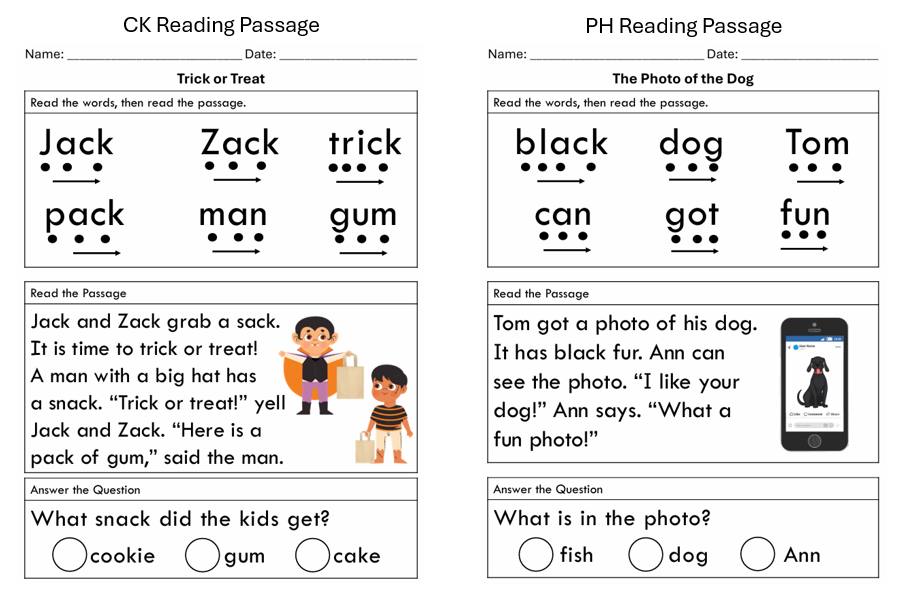
These are free and you can get them here: CK Reading Passage, PH Reading Passage
Here are some additional digraph resources:


Comments